Short-term Training Program in Korea Strengthens Academic and Research Collaboration
Seoul, South Korea – February 7, 2025 – A delegation from Universitas Pendidikan Indonesia (UPI) and Universitas Negeri Semarang (UNNES) participated in a Short-term Training Program in Korea from February 3 to February 7, 2025. The program, hosted by Sogang University under the LUPIC (Leading University Project for International Cooperation) initiative, aimed to enhance knowledge exchange in science education, fabrication technology, and research collaborations between Indonesian and Korean institutions. The Short-term Training Program is one of the key agendas of the LUPIC project, which was initiated in 2023 and is set to continue until 2029.
Strengthening International Cooperation through LUPIC
The invited Indonesian delegation included Prof. Woro Sumarni and Prof. Cepi Kurniawan from UNNES, along with Prof. Asep Kadarohman, Prof. Triannisa Rahmawati, and Prof. Fitri Khoerunnisa from UPI. Over five days, they engaged in seminars, workshops, laboratory visits, and cultural experiences to foster international academic and research cooperation.
The program began with the LUPIC Bi-annual Meeting, where representatives from UPI, UNNES, and UNDIKSHA presented their progress reports, achievements, and strategic plans for the future. The discussions primarily centered on evaluating the outcomes of the second-year projects, identifying key successes and challenges, and formulating strategic roadmaps for the third year of collaboration. The meeting facilitated constructive dialogues on strengthening academic partnerships, enhancing research outputs, and expanding student and faculty exchange opportunities. Notably, representatives from UNDIKSHA participated virtually, ensuring their active involvement in shaping the next phase of the LUPIC initiative.

[From Left to Right: Prof. Fitri Khoerunnisa, Mrs. Triannisa Rahmawati, Prof. Asep Kadarohman (UPI side), Prof Won Koo Lee (Sogang University), Dr. Cepi Kurniawan, Prof. Woro Sumarni, and Dr Sun Yeol Lee (Sogang University)]
High-Level Engagements and Science Education Advancements
Beyond academic engagements, the delegation visited the Indonesian Embassy in Korea, where they met with Education Attaché, Mrs. Amaliah, to discuss academic and research partnerships between Indonesian and Korean institutions under LUPIC. This visit was documented on the Indonesian Embassy’s Instagram page (view post).

The Indonesian delegation also held a high-level meeting with Sogang University’s leadership, including President Prof. Luke Jong-hyeok Shim and Executive Vice President Prof. Tai-kyung Song, to discuss potential institutional partnerships and research collaboration opportunities. The discussions focused on expanding academic exchanges, joint research initiatives, and collaborative projects in emerging scientific fields. Both parties expressed a strong commitment to fostering long-term cooperation, emphasizing the importance of interdisciplinary collaboration, faculty and student mobility programs, and access to cutting-edge research facilities. This meeting served as a critical step in strengthening bilateral academic ties between Indonesian and Korean institutions, paving the way for future innovations and international research excellence.

The delegation then visited Seoul National University (SNU) to attend a seminar on recent advancements in science education, featuring insightful presentations by Prof. Mihyun Son and Prof. Dae-Hong Jung. The seminar covered science education reforms, the integration of AI in teaching methodologies, and the development of digital competencies for future educators. These discussions provided valuable perspectives on innovative pedagogical approaches and the role of emerging technologies in enhancing science education.nFollowing the seminar, participants were given a guided tour of SNU’s College of Education laboratories, where they explored state-of-the-art research facilities, experimental setups, and digital learning environments designed to support interactive and technology-driven education. The seminar was broadcast live on YouTube (watch here), allowing a wider audience to benefit from the discussions, including 28 students from UNNES who participated virtually. This session not only fostered academic exchange but also strengthened collaborative ties between Indonesian and Korean institutions in the field of science education and technological innovation.

Talk from Prof. Dae-Hong Jung (Seoul National University)
Additionally, participants had the opportunity to immerse themselves in Korean culture by visiting SNU’s Kyujanggak Exhibition Room, where they attended the “Kyujanggak: Embracing the Knowledge of the World” exhibition. This exhibition showcased a rich collection of historical documents, artifacts, and literary works, offering valuable insights into Korea’s intellectual and cultural heritage. Through interactive displays and archival materials, participants gained a deeper appreciation of Korea’s scholarly traditions, particularly the role of Kyujanggak as a royal library and research institute during the Joseon Dynasty. The visit not only enriched their cultural experience but also highlighted the significance of historical preservation and academic knowledge-sharing across nations.

[Visiting Kyujanggak Exhibition at SNU]
Technological Innovation and Fabrication Training
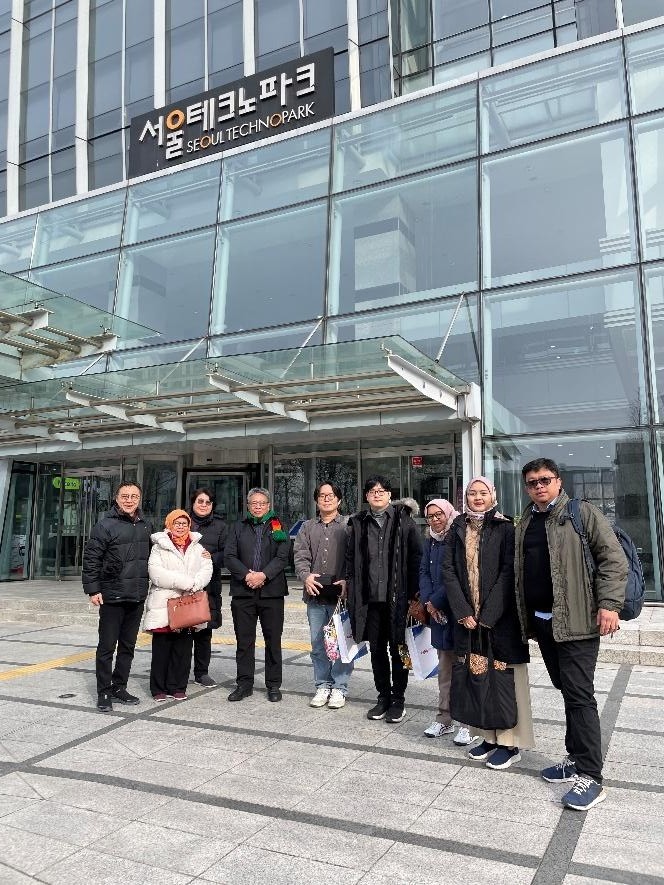
On the second day, the delegation visited Seoul National University of Science and Technology (SNUST) for an Introduction to Technopark (Semiconductor Fabrication Lab) session, led by Prof. Hyun Woo Cho and Prof. Seul Ki Hong. This session provided in-depth insights into cutting-edge semiconductor fabrication technologies, covering topics such as digital fabrication, microfabrication techniques, prototyping, and advanced semiconductor manufacturing processes. Participants were introduced to state-of-the-art equipment and industry-standard methodologies, gaining practical knowledge on how these technologies drive innovation in electronics and material science. Following the session, the delegation toured the 3D Printing Laboratory at SeoulTech, where experts demonstrated advanced prototype production using high-precision 3D printing machines. The participants observed various additive manufacturing techniques, exploring their applications in rapid prototyping, industrial production, and scientific research. This visit provided valuable exposure to the latest advancements in fabrication technology, highlighting its impact on research, product development, and engineering solutions.

[At Seoul Tech University Technopark]

[Fabrication Lab with 3D Printing Machines]
Another key highlight of the program was the hands-on workshop on modern fabrication and technology at Sogang University’s LAB311. This session provided participants with practical experience in digital manufacturing, prototyping, and technological innovation. During the workshop, participants explored Maker’s Space and Biocore facilities, which house state-of-the-art equipment for advanced fabrication and bioengineering applications. A major focus of the workshop was the application of Arduino-based products in scientific research. Participants were introduced to various Arduino-based systems used in data acquisition, automation, and sensor integration for research purposes. The session covered real-world applications of Arduino technology, including environmental monitoring, chemical sensing, and laboratory automation. By engaging in interactive demonstrations and hands-on assembly, participants gained practical knowledge on how to design, program, and integrate Arduino-based solutions into their own research projects. This workshop not only enhanced participants' technical skills but also showcased the potential of modern fabrication techniques in driving scientific innovation.

[Hands-on session with an expert from Lab 311 on operating the CNC laser cutting machine]
In this lab, participants were introduced to various Arduino-based products designed to support and enhance research activities. These products included sensor modules, microcontrollers, and automation systems that can be integrated into scientific experiments. The session covered practical applications of Arduino technology in areas such as environmental monitoring, chemical sensing, and data acquisition. Experts demonstrated how these tools can be programmed and customized for different research purposes, providing participants with hands-on experience in developing prototypes and implementing real-time data collection systems. The interactive nature of the session allowed participants to explore innovative ways to incorporate Arduino technology into their academic and scientific research projects.

[Expert from Lab 311 showing the Arduino-based PCR machine]
Sogang University also demonstrated its strong commitment to startup incubation, offering dedicated office spaces, funding opportunities, and mentorship programs for emerging entrepreneurs. The university provides grants and technical support to help startups develop innovative solutions, particularly in science and technology-driven fields. Through these initiatives, Sogang fosters a collaborative ecosystem where academia and industry converge, enabling researchers and students to transform their ideas into market-ready innovations. By integrating state-of-the-art facilities, business development guidance, and networking opportunities, the university plays a crucial role in bridging the gap between academic research and commercial applications, ultimately contributing to technological advancements and economic growth.

Science Education Networking
A seminar on science education networking featured Prof. Jae Young Han and Mr. Younghak Kim, who shared valuable insights into collaborative models for science teacher development. The session focused on best practices in teacher training, curriculum enhancement, and interdisciplinary collaboration to strengthen the quality of science education across institutions.
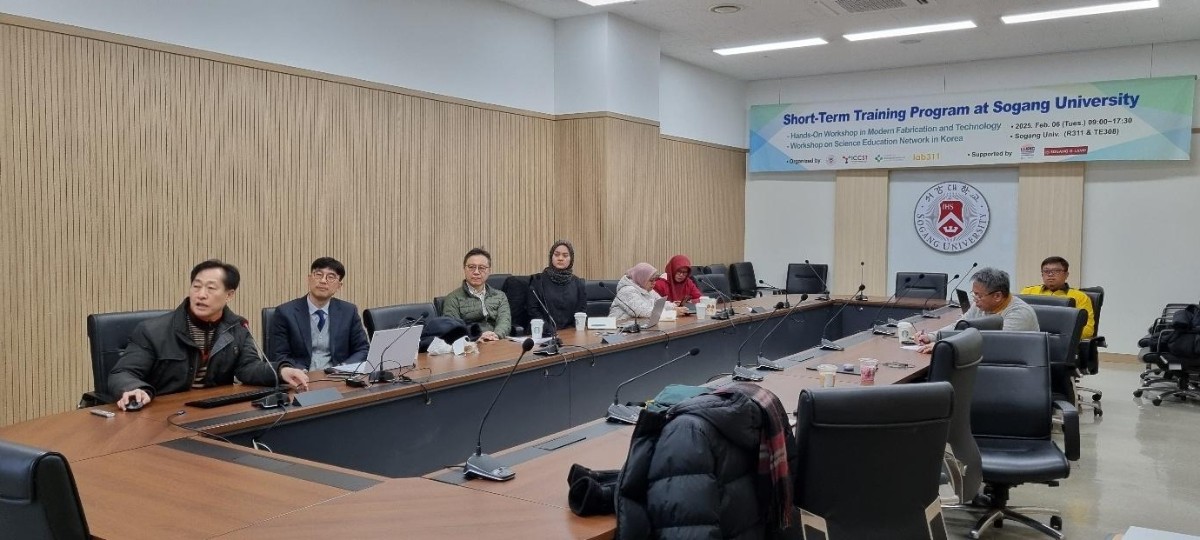
During the seminar, Mr. Younghak Kim introduced the website Sedu21.com, an online platform operated by Korean science teachers to share their experiences, lesson plans, and teaching materials. The website serves as a collaborative hub where educators can exchange innovative teaching strategies, discuss classroom challenges, and access a wide range of instructional resources. By leveraging this platform, science teachers can enhance their professional development and contribute to the continuous improvement of science education.


The speakers highlighted effective strategies for fostering professional learning communities, emphasizing the importance of peer collaboration, knowledge sharing, and continuous professional development for science educators. They also discussed cross-institutional cooperation, showcasing successful international partnerships that have contributed to enhancing science education frameworks and teaching methodologies.
The seminar provided participants with a platform to exchange ideas and experiences, enabling them to explore new ways of integrating research-based teaching methods and emerging technologies into science education. This session served as a catalyst for future collaborations, encouraging stronger academic ties between Indonesian and Korean educators in developing innovative and sustainable education initiatives.
Research Collaboration on Indonesian Essential Oils
The final day of the program included a visit to Hanyang University, where Prof. Jin Seok Lee led an in-depth discussion on the biocompatibility and anti-aging properties of Indonesian essential oils. This session explored the scientific potential of essential oils derived from Indonesian plant sources, focusing on their chemical composition, biological activity, and potential applications in pharmaceuticals, cosmetics, and biomedical research.
Prof. Jin Seok Lee elaborated on cutting-edge research techniques used to evaluate the antioxidant, antimicrobial, and anti-inflammatory properties of indonesian essential oils (the sample provided by Prof Asep Kadarohman from UPI). The discussion also covered biocompatibility assessments, ensuring that these natural compounds can be safely integrated into skin-care formulations, drug delivery systems, and regenerative medicine.
The session fostered meaningful exchanges between Indonesian and Korean researchers, encouraging the development of joint research initiatives and interdisciplinary collaborations in chemistry, biotechnology, and materials science. The potential of utilizing Indonesian essential oils in high-value industries was also highlighted, paving the way for future studies on extraction methods, formulation improvements, and commercial applications.
This visit reinforced the importance of international cooperation in scientific innovation, strengthening ties between Hanyang University and Indonesian institutions in their shared pursuit of sustainable and impactful research.

[Future Prospects for Indonesian-Korean Academic Cooperation]
The Short-term Training Program in Korea successfully strengthened academic and research collaboration between UPI, UNNES, UNDIKSHA, and Korean institutions. The program provided valuable insights into science education advancements, fabrication technology applications, and cross-cultural academic exchanges. Moving forward, the outcomes of this training will serve as a foundation for future joint research projects, student and faculty exchanges, and curriculum development initiatives. This collaboration between Indonesian and Korean universities continues to foster innovation, scientific progress, and educational excellence through international cooperation.