Hands-On Workshop-IoT Integration For Innovative Chemistry Teaching
On August 13, Universitas Negeri Semarang (UNNES), Sogang University (South Korea), and Universitas Lambung Mangkurat (ULM) officially launched the first day of their international chemistry workshop under the LUPIC (Leading University Project for International Cooperation) program. With the theme "IoT Integration for Innovative Chemistry Teaching," the event aimed to modernize science education through digital tools, sustainability, and small-scale experimentation.
The morning began with an opening ceremony at ULM. Academic leaders from four institutions UNNES, ULM, UIN Antasari, and UNISKA gave their remarks, emphasizing how LUPIC fosters meaningful cross-border collaboration in education. The event was formalized with the signing of Memoranda of Understanding (MoU) and Implementation Agreements (IA), followed by the exchange of souvenirs as symbols of academic partnership.
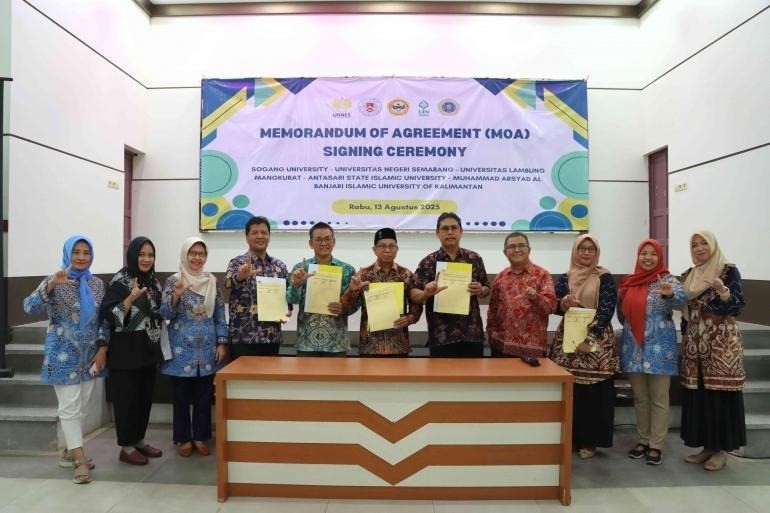
After the ceremony, participants including lecturers, teachers, and students joined four expert-led sessions reflecting the day's central mission: integrating innovation into chemistry classrooms.
Materi 1: Redesigning Chemical Synthesis Pathways for Environmental Sustainability
Presented by Prof. Edy Cahyono, M.Si, this session explored how chemical synthesis can be reimagined to reduce waste and minimize environmental impact.
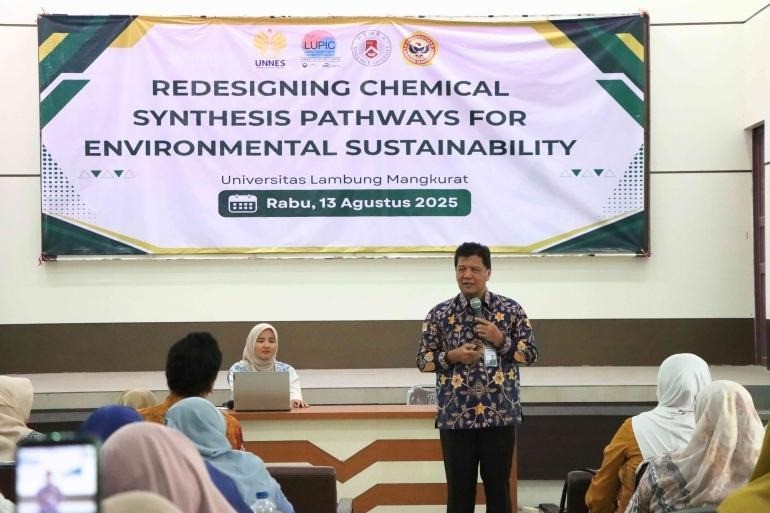
Prof. Edy Cahyono introduces sustainable synthesis pathways while participants engage attentively
Materi 2: IoT in Chemistry Learning
Delivered by Harjito, S.Pd., M.Sc, this session demonstrated how IoT devices and sensors can create interactive, real-time chemistry learning experiences. The talk emphasized affordable digital tools that schools can adopt under LUPIC's vision for inclusive innovation.
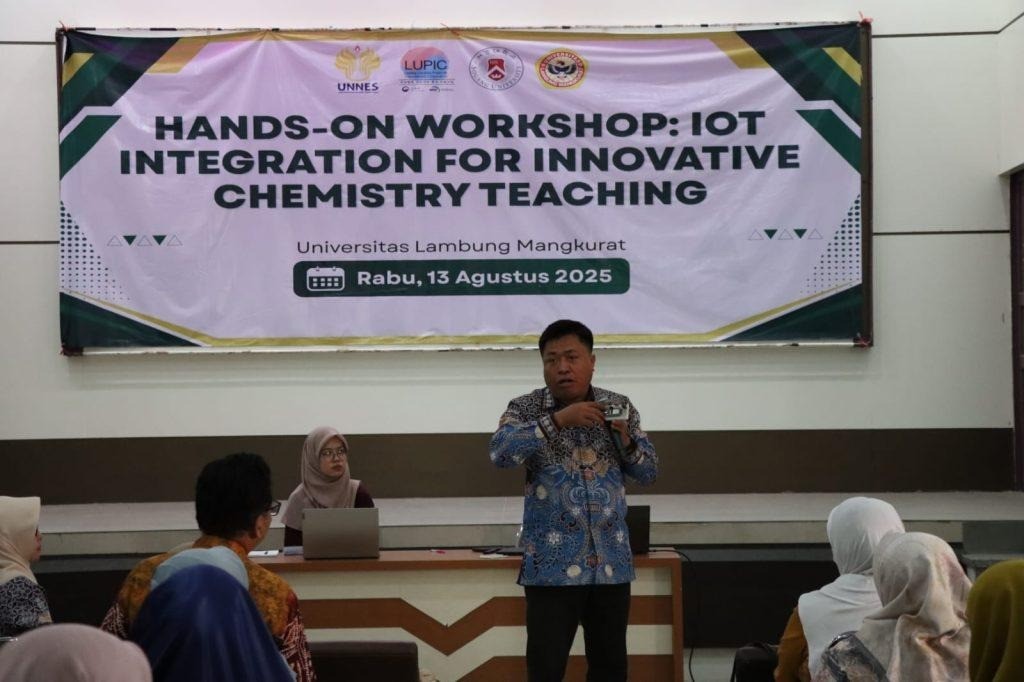
Harjito showcases IoT applications in chemistry, explaining their role in creating smarter classrooms.
The day concluded with a Capstone Design & Fablab sharing session, where participants exchanged project ideas, discussed innovative practices, and strengthened academic networks across institutions. The session highlighted how collaboration can spark new approaches in teaching and research.
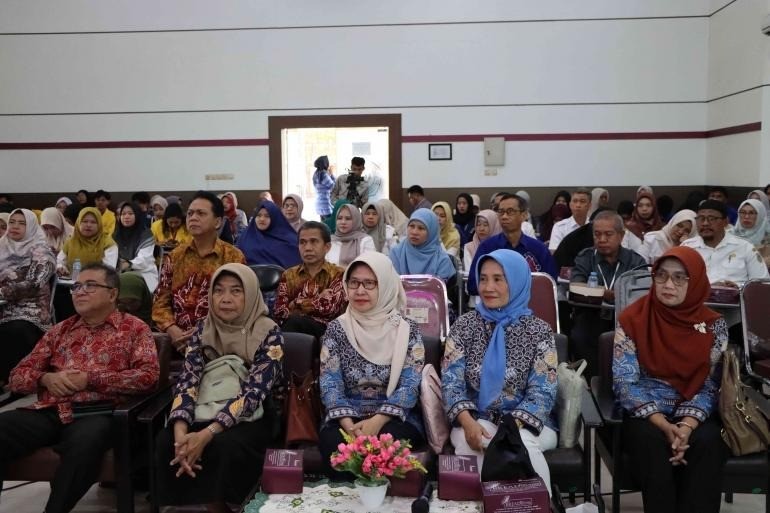
Participants engage in the Capstone Design & Fablab sharing session, exchanging ideas for future collaborations supported by LUPIC.
By the end of the workshop had successfully showcased how IoT and innovative approaches can transform chemistry education fulfilling LUPIC's mission of fostering sustainability, inclusivity, and global cooperation.